

Is Your Heart Trying to Tell You Something?
Your heart never stops working—so when it starts to struggle, it sends out warning signs. Are you listening?
In 2025, heart failure remains one of the leading causes of hospitalizations in adults over 40. But here’s the good news: it rarely happens without warning. By recognizing the early signs of heart failure, you can take control of your health and get ahead of potential complications.
What Is Heart Failure?
Heart failure is a chronic condition where the heart loses its ability to pump blood efficiently. This limits oxygen supply to vital organs and leads to a cascade of health problems.
The process is often slow and insidious—many people chalk up the early symptoms to aging, stress, or other illnesses. But ignoring these signs can delay diagnosis and lead to serious consequences.
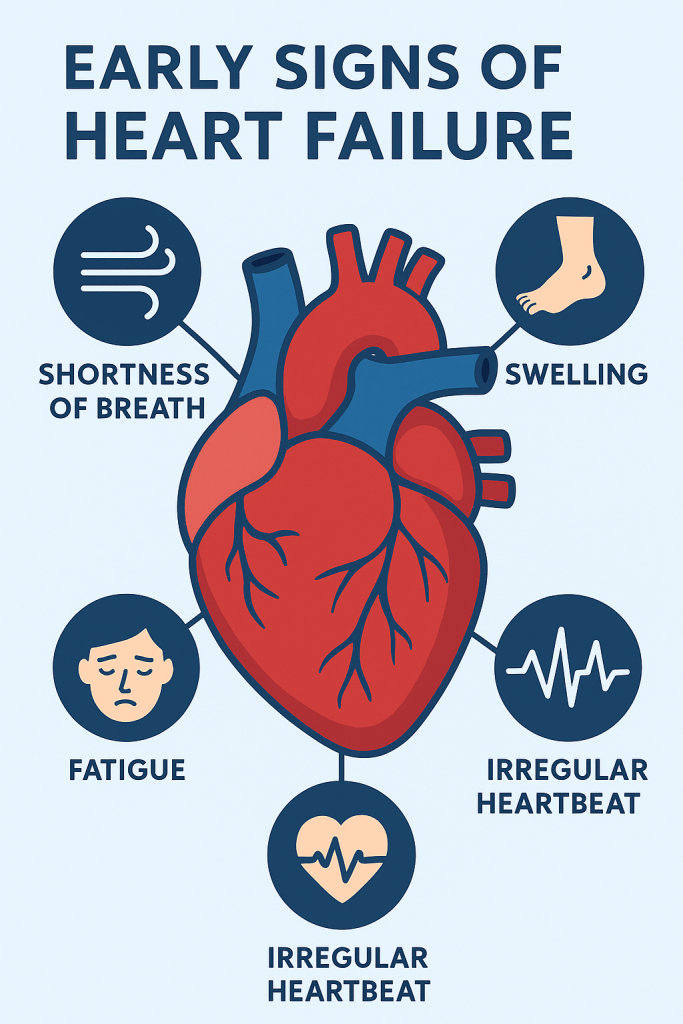
The 5 Key Warning Signs of Heart Failure
1. Shortness of Breath (Dyspnea)
Shortness of breath is one of the most common—and overlooked—signs of early heart failure. It can occur:
- After mild physical activity
- When lying flat in bed
- At night, waking you up gasping for air
This symptom usually results from fluid buildup in the lungs due to the heart’s reduced pumping ability. If you find yourself needing extra pillows or avoiding stairs, it’s time to take it seriously.
2. Swelling in Legs, Ankles, or Feet (Edema)
Unexplained swelling in your lower limbs could be more than just poor circulation.
When your heart can’t pump efficiently, blood backs up in the veins, and fluid leaks into surrounding tissues—causing edema. Shoes may feel tighter, or socks might leave deep marks on your skin.
3. Persistent Fatigue or Weakness
Feel like your energy is constantly drained? Fatigue may not be “just getting older.”
With heart failure, reduced blood flow means less oxygen to your muscles and brain, making even simple tasks feel exhausting.
If you’re too tired for activities you used to enjoy, it may be time to have your heart checked.
4. Irregular or Rapid Heartbeat (Palpitations)
Your heart may try to “compensate” by beating faster or irregularly. Common signs include:
- Fluttering in the chest
- Racing pulse without exertion
- Sensation of skipped beats
If heart palpitations are frequent or accompanied by lightheadedness or chest pressure, seek medical attention right away.
5. Chronic Cough or Wheezing
A lingering cough—especially one that brings up pink, frothy mucus—can indicate fluid buildup in the lungs, a common complication of heart failure.
Often mistaken for asthma or seasonal allergies, this symptom deserves a closer look when combined with others on this list.
When to See a Doctor
If you’re experiencing two or more of these symptoms, don’t wait. Schedule a check-up and ask your provider about:
- Echocardiogram (heart ultrasound)
- Electrocardiogram (EKG)
- BNP blood test to check for heart stress markers
Early diagnosis means more treatment options and a better long-term outlook.
Your Heart Is Talking—Are You Listening?
Ignoring early warning signs of heart failure can be dangerous—but listening and acting early can save your life.
If you notice symptoms like shortness of breath, swelling, fatigue, or palpitations, don’t dismiss them. Talk to your doctor, get screened, and stay proactive about your cardiovascular health.
FAQ: Early Signs of Heart Failure
Q: Can heart failure develop without chest pain?
A: Yes. Many people with heart failure never experience chest pain. Symptoms like breathlessness, swelling, and fatigue are often more common.
Q: Is heart failure the same as a heart attack?
A: No. A heart attack is a sudden event; heart failure is a chronic, progressive condition. However, heart attacks can lead to heart failure.
Q: Can young adults get heart failure?
A: While it’s more common in older adults, heart failure can affect younger people, especially those with high blood pressure, diabetes, or a history of heart disease.
Q: What tests detect heart failure?
A: Echocardiograms, EKGs, chest X-rays, and BNP blood tests are commonly used to diagnose and monitor heart failure.
Q: Can heart failure be reversed?
A: It can’t usually be fully reversed, but with early treatment, symptoms can be managed and progression slowed significantly.
Stay Informed, Stay Heart-Smart
Understanding the early signs of heart failure can help you or a loved one catch the condition before it worsens. Don’t brush off symptoms—your body knows when something’s wrong.
Like this article? Share it with someone who needs to read it. Subscribe for more heart health updates.
Yours in good health
MDLINE Health
 MDLINE HEALTH