

As you may know, your skin is not just a protective barrier, or just for cosmetic; it often also serves as a mirror to your overall health, especially your hormonal balance. Hormones play a crucial role in regulating various bodily functions, including the health of our skin. When they go off, your skin is one of the many organs that show signs. Let’s go over five common skin manifestations of hormonal diseases, and shed light on the intricate connection between our hormones and the largest organ in our body.
1-Acne
Although most people with acne do not have an underlying hormonal disorder, it is important to point to the fact that androgens play a key part in acnegenesis.
Sebaceous glands, found everywhere on the body except for the palmar surface of the hands and the plantar surface of the feet, produce oil called sebum. They do so under direct stimulation from the androgens. Increased androgen production (hyperandrogenism) from the gonads or the adrenal glands, or a hypersensitivity of the sebaceous glands to androgens, results in increased sebum production. Simply put, acne develops from a combination of blockage of the pilosebaceous unit (the pores) by the androgen-induced excess sebum and strong inflammation triggered by a bacteria present in the skin named Propionibacterium acne.
Polycystic Ovary Syndrome (PCOS) is an exemple of hormonal disorder commonly associated with adult acne. PCOS leads to an overproduction of androgens, which can trigger breakouts. Other hormonal diseases, such as Cushing’s syndrome and adrenal gland disorders, can also lead to hormonal imbalances that manifest as acne. Treating the underlying hormonal issue is often the key to clearing up the skin.
2-Hirsutism: unwanted hair growth
Hirsutism refers to the unwanted development of coarse, dark hair in areas where women do not typically have a lot of hair, such as the face, chest and back. This condition results from hyperandrogenism, an increased male hormone production in women which can occur in diseases like PCOS or adrenal gland disorders. Another direct effect of androgen on the skin, other than sebum production, is the stimulation of the hair follicles to grow more hair. Women with hirsutism may experience embarrassment and self-esteem issues due to this unwanted hair growth.
Hirsutism can be managed by addressing the underlying hormonal issue. Treatments may include hormonal medications (anti-androgen drugs) to regulate androgens or cosmetic approaches like laser hair removal and electrolysis to remove the excess hair. Managing the hormonal imbalance is crucial not only for cosmetic reasons but also for overall health.
3-Skin Pigmentation Changes: Melasma and Hyperpigmentation
Melasma and hyperpigmentation are conditions characterized by the darkening of patches of skin. These conditions can be triggered or worsened by hormonal changes, particularly during pregnancy and while taking hormonal contraceptives. These patches of hyperpigmentation are often referred to as the “mask of pregnancy” when they occur during gestation. The exact mechanism behind hormonal-induced skin pigmentation changes is not fully understood but is thought to be related to the stimulation of melanocytes (pigment-producing cells) by hormones like estrogen.
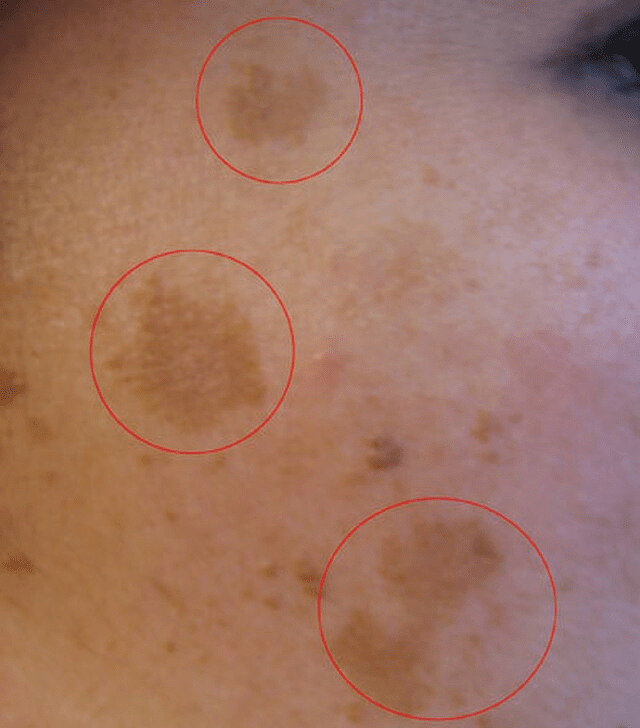
Another cause of skin hyperpigmentation is adrenal insufficiency. How? When the adreral glands do not produce enough steroid hormones, a feedback mechanism trigers the production of a peptide precursor name proopiomelanocortin (POMC), melano as in melanin. POMC will produce a Melanocyte-stimulating factor (MSH), and MSH will stimulate the melanocytes to produce more melanin.
Talking about skin hyperpigmentation and hormone, we cannot forget to mention acanthosis nigricans. Acanthosis nigricans is a dermatological condition characterized by dark, thickened patches of skin, often appearing in body folds and creases like the neck, armpits, and groin. It is typically a sign of an underlying health issue, such as insulin resistance, obesity, or metabolic syndrome.

Acanthosis nigricans can be unsightly and may cause itching or discomfort, but it is essential to recognize it as a potential indicator of an internal health concern. Managing the underlying condition, often through lifestyle changes and medical intervention, can help improve or even resolve this skin condition. Regular medical evaluation is crucial when acanthosis nigricans is present.
4-Skin Thinning and Bruising: Adrenal Insufficiency
When the adrenal glands fail to produce enough cortisol, a condition known as adrenal insufficiency or Addison’s disease, it can lead to thinning of the skin and easy bruising.
Skin thinning in adrenal insufficiency occurs due to the loss of collagen, which provides structural support to the skin. As collagen diminishes, the skin becomes fragile and more susceptible to injury. Additionally, the reduction in cortisol weakens the skin’s ability to heal, resulting in delayed wound healing.
Adrenal insuffciency may also causes body hair loss and, as mentioned above, hyperpigmentation.
Management of adrenal insufficiency involves hormone replacement therapy to replace the deficient cortisol. Patients with this condition must be vigilant about monitoring their hormone levels and working closely with endocrinologists to ensure optimal hormone replacement.
5-Dry Skin: Thyroid Troubles
The thyroid gland plays a vital role in regulating metabolism and energy levels in the body. When the thyroid gland malfunctions, it can lead to hormonal imbalances, affecting various bodily functions, including skin health. One common skin manifestation of thyroid disorders, such as hypothyroidism, is dry skin.
Hypothyroidism occurs when the thyroid gland doesn’t produce enough thyroid hormones, leading to a slowdown in metabolic processes. This slowdown can reduce the production of natural skin oils, causing dryness, flakiness, and rough skin. It can also slow down the shedding of dead skin cells, leading to a dull complexion.
Managing thyroid hormone levels through medication prescribed by an endocrinologist can often help improve skin hydration and overall health. Additionally, using moisturizers and gentle skincare products can alleviate the discomfort associated with dry skin.
Our skin is a fascinating organ that can indicate underlying health issues related to hormones. In this blog, we discuss five common skin signs of hormonal diseases: acne, excess hair growth, changes in skin pigmentation, dry skin, and thinning skin. If you notice any persistent or unusual skin changes, it’s important to consult a healthcare professional. Taking care of your skin goes beyond cosmetics – it’s about nurturing your overall well-being.
Yours in good health
MDLINE HEALTH
 MDLINE HEALTH
